Substance Abuse Counselor Degree and Career Guide


Find Substance Abuse Counselor Salaries for Your State

Learn what you may be able to earn in your state, how the cost of living and other factors could impact your pay, why education matters—and much more.

By: All Psychology Schools Staff

Updated: January 15, 2026

Home » Substance Abuse Counseling » Substance Abuse Counseling Salary » North Carolina

Substance Abuse Counselor Salary in North Carolina

addiction counselor leads group of recovering people

While not as prevalent as some other states, North Carolina does have ongoing challenges with substance abuse and addiction, including issues related to opioids. While efforts are made to address these problems through various initiatives and treatment programs, there remains a significant need for substance abuse counselors throughout the state. Here are some reasons why someone might consider North Carolina for practicing as an addiction counselor:

High demand for counselors: There is a consistent demand for substance abuse counselors in North Carolina due to the prevalence of substance use disorders, including opioids and other substances.

Varied employment opportunities: Counselors can find employment in a variety of settings, including rehabilitation centers, outpatient clinics, hospitals, community health centers and private practice.

Diverse population needs: North Carolina’s population creates opportunities to work with diverse communities and address different aspects of addiction and recovery.

Supportive professional environment: The state offers professional support networks, licensure opportunities and continuing education options to enhance counselor skills and career advancement.

Impactful work: Practicing as a substance abuse counselor in North Carolina allows professionals to make a meaningful difference in individuals’ lives, contributing to community health and well-being.

Quick view

There are 9,980 people employed as substance abuse and behavioral counselors in North Carolina says the U.S. Bureau of Labor Statistics (BLS). This equates to two people working in the profession for every 1,000 people who live in the state. North Carolina has a drug overdose rate of 41.8 people per 100,000, said the CDC, which places it in the middle of higher and lower deaths states. The median wage per hour in North Carolina is $27 and the forecasted job growth for the coming decade is 16.8%.

North Carolina has several prominent employers offering opportunities for substance abuse counselors, including hospitals, recovery centers and mental health organizations. Here are five diverse employers in the state:

Duke Center on Addiction and Behavior Change, Durham, NC:
Duke is a major academic medical center with a comprehensive behavioral health department that offers a range of addiction and mental health services. It provides inpatient and outpatient programs, making it one of the leading employers for substance abuse counselors in the state.
UNC Health Care, Chapel Hill and multiple locations, NC:
With a network of hospitals and clinics throughout North Carolina, UNC Health Care is known for its comprehensive addiction recovery programs. Substance abuse counselors can find positions in its outpatient and residential treatment facilities, as well as in specialized mental health clinics.
RHA Health Services, Asheville and multiple locations, NC:
RHA Health Services is a nonprofit organization providing behavioral health, developmental disability, and substance use treatment services across North Carolina. It operates numerous residential and outpatient treatment centers, offering diverse opportunities for substance abuse counselors.
Pardee UNC Hospital Detox Center, Hendersonville, NC:
Pardee offers both outpatient services and inpatient care, including a robust behavioral health division with a focus on addiction recovery and mental health. Their integrated approach to care provides opportunities for counselors looking to work in holistic treatment environments.
Coastal Horizons Center, Wilmington, NC:
This community-based nonprofit focuses on promoting healthier lives through prevention, intervention, and treatment services. Coastal Horizons offers a wide range of addiction services, including outpatient treatment, mobile crisis management, and a residential recovery center, making it a top employer for counselors.

Salary stats for NC addiction counselors

While the median salary for substance abuse and behavioral counselors in North Carolina is just slightly under the national median, pay may vary depending upon several factors, including where you work in the state, how much experience you have, what level of education you have attained and if you have earned any professional credentials or completed any courses offered by the state.

North Carolina does require substance abuse counselors to complete specific state-mandated training and meet certain licensure requirements to practice and advance in the field. The state’s regulatory body for this profession is the North Carolina Substance Abuse Professional Practice Board (NCSAPPB).

Median substance abuse counselor salary in North Carolina

The median annual salary for substance abuse counselors in North Carolina is $56,470, just lower than the national median of $59,190. However, it’s important to note that location within the state makes a difference. As an example, Raleigh’s median pay is well over the national median, and the Chapel Hill-Durham area, which is a large employer of addiction counselors, also pays above the national median. Here are salaries for the NC cities that the BLS records:
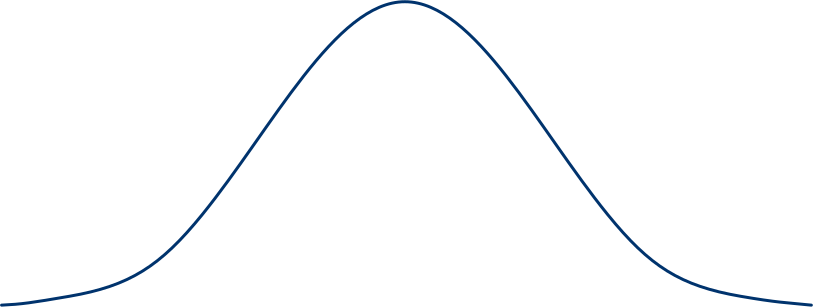

Substance Abuse, Behavioral Disorder, and Mental Health Counselors
hero-widget-desktop-graph hero-widget-desktop-graph

10%$38,440

25%$47,460

50%$56,470Median

75%$68,470

90%$83,790

Median Hourly Wage$27

Job growth16.8%

Total Employment8,930

Metro area Median Salary Bottom 10% Top 10%
Raleigh-Cary, NC $60,350 $44,810 $86,080
Durham-Chapel Hill, NC $58,590 $42,240 $93,390
Fayetteville, NC $57,420 $36,270 $81,150
Asheville, NC $57,320 $39,050 $85,110
Charlotte-Concord-Gastonia, NC-SC $56,450 $34,730 $88,170
Greenville, NC $55,170 $38,810 $77,850
Greensboro-High Point, NC $54,010 $31,200 $91,440
Winston-Salem, NC $53,800 $34,340 $78,730
Pinehurst-Southern Pines, NC $53,660 $41,750 $86,120
Goldsboro, NC $53,590 $39,970 $84,130

Source: U.S. Bureau of Labor Statistics (BLS) 2024 median salary; projected job growth through 2034. Actual salaries vary depending on location, level of education, years of experience, work environment, and other factors. Salaries may differ even more for those who are self-employed or work part time.

Salary range in North Carolina

The salary range for substance abuse counselors in North Carolina typically spans from $38,440 to $83,790 per year.

Here’s a breakdown by experience level:

  • Entry-level (0-2 years): $37,000 to $44,000 per year
  • Mid-career (3-7 years): $44,000 to $62,000 per year
  • Experienced (8+ years): $63,000 to $79,000 per year

By employer type:

  • Nonprofits and community organizations: $40,000 to $50,000 per year
  • Hospitals and healthcare systems: $50,000 to $65,000 per year
  • Private practice or specialized treatment centers: $55,000 to $70,000 per year

Pay by metro area for NC substance abuse counselors

Substance abuse counselors in larger NC cities such as Raleigh, Charlotte and Durham tend to earn slightly more, with salaries ranging from $50,000 to $60,000 or higher. Counselors in more rural parts of North Carolina may see salaries closer to the lower end of the range, typically around $40,000 to $50,000 per year.

Unfortunately, no metro or non-metro area in North Carolina ranks in the BLS’ top 10.

Metro Area Median Annual Salary
Bend, OR $82,380
Ogden, UT $81,300
Anchorage, AK $79,830
Fairbanks-College, AK $78,750
Boulder, CO $77,720
Hanford-Corcoran, CA $76,240
Flagstaff, AZ $75,930
Santa Fe, NM $75,420
Salem, OR $74,810
San Jose-Sunnyvale-Santa Clara, CA $74,670

Salary growth and job outlook

The job growth outlook for substance abuse counselors in North Carolina is strong, aligning with the national trend of increasing demand in this field. Here’s a comparison between North Carolina and the national job growth rate:

  • According to the U.S. Bureau of Labor Statistics (BLS), the projected national job growth rate for substance abuse counselors is 16.8% through 2034, which is much faster than the average for all occupations.
  • In North Carolina, the job growth for substance abuse counselors is expected to be strong, closely mirroring or potentially exceeding the national average due to the state’s grappling with opioid and other substance abuse challenges. Specific data for North Carolina projects a growth rate around 20% to 24%, driven by expansion of its healthcare infrastructure, with many health systems and nonprofit organizations increasing their behavioral health and addiction treatment services. The state’s recent move to expand Medicaid coverage is also expected to increase access to addiction services, further driving demand for counselors.

How do substance abuse counselor salaries compare?

Here’s a look at how substance abuse salaries compare to other types of counselors at a national level, according to the BLS:

Career Median Annual Salary
Substance Abuse, Behavioral Disorder, and Mental Health Counselors $59,190
Rehabilitation Counselors $46,110
Educational, Guidance, and Career Counselors and Advisors $65,140
Marriage and Family Therapists $63,780
Mental Health and Substance Abuse Social Workers $60,060

Factors affecting salaries in North Carolina

Several North Carolina-specific factors impact salary growth for substance abuse counselors, influencing how much counselors can earn and how quickly their salaries may increase over time. These factors range from regional economic conditions to state policies and the structure of healthcare in the state. Here’s a closer look at the key factors:

Urban vs. rural:
Salary growth can be significantly influenced by whether a counselor works in an urban area like Charlotte, Raleigh or Durham versus a more rural region. Urban areas, where the cost of living is higher, often offer better-paying opportunities and quicker salary growth to keep pace with living expenses. In contrast, rural areas may have lower salaries initially, but the growing need for services in these areas can create new opportunities for salary increases.
Demand:
North Carolina continues to face an opioid epidemic, particularly in rural areas and some urban centers. The ongoing demand for services in response to this crisis leads to job growth and opportunities for salary increases, especially for counselors with specialized skills in treating opioid addiction. Employers are often willing to offer competitive salaries to attract counselors in high-demand regions.
Healthcare infrastructure expansion:
North Carolina has seen expansions in its healthcare systems, particularly in mental health and addiction treatment services. Large health systems like UNC Health have been investing in behavioral health programs, leading to more job openings and salary competition for qualified counselors. As healthcare institutions grow and expand services, they offer better opportunities for salary advancement, particularly for counselors working in these systems.
Medicaid expansion:
North Carolina recently expanded Medicaid under the Affordable Care Act, which significantly increases access to substance abuse treatment for low-income individuals. This expansion allows more people to seek treatment and drives demand for substance abuse counselors, potentially raising salaries as providers seek to hire more qualified staff to meet this increased demand.
Education level:
In North Carolina, achieving higher licensure levels, such as becoming a Licensed Clinical Addictions Specialist (LCAS) or obtaining additional credentials, directly impacts salary growth. Counselors with advanced licensure or specializations, such as in co-occurring mental health disorders or trauma-informed care, tend to experience faster salary growth. Employers often offer higher pay or promotions to counselors who pursue additional education and state-specific certifications.
State and federal grant funding:
North Carolina has received federal and state grants aimed at combating substance abuse, which increases funding for treatment programs across the state. This funding may create salary growth opportunities for counselors working in organizations that receive government support, as grants may allow for salary increases to retain skilled staff.
Workforce shortages:
Rural areas in North Carolina, in particular, are experiencing workforce shortages in the field of addiction counseling. The need for qualified counselors may lead to faster salary growth as employers compete to attract and retain staff in underserved areas, sometimes offering relocation bonuses, salary premiums, or incentives.

What resources are there if I believe I’m being paid unfairly in NC?

If a substance abuse counselor or any worker in North Carolina believes they are receiving unfair pay, there are several resources and steps they can take to address the situation. These resources focus on wage disputes, pay discrimination, and ensuring compliance with state and federal labor laws:

North Carolina Department of Labor (NCDOL)

  • The NCDOL’s Wage and Hour Bureau is responsible for enforcing state labor laws, including issues related to minimum wage, overtime and wage payment disputes. Employees can file complaints if they believe they are being paid unfairly or not receiving proper compensation for hours worked. How to file a complaint: Workers can file wage complaints online or by submitting a paper form available on the NCDOL website. The NCDOL will investigate claims and work with the employer to resolve any discrepancies.

Equal Employment Opportunity Commission (EEOC)

  • If the unfair pay issue involves pay discrimination based on race, gender, age, disability or other protected characteristics, a worker can file a complaint with the EEOC. The EEOC enforces federal laws prohibiting wage discrimination under laws like the Equal Pay Act and Title VII of the Civil Rights Act. How to file a charge: Workers can file a charge of discrimination with the EEOC either online, in person at their local EEOC office, or by mail. The EEOC will investigate claims of pay discrimination and may pursue legal action if necessary.

North Carolina Justice Center

  • Legal assistance: Workers can seek legal advice or representation through the Justice Center, particularly in cases where they need help navigating complex wage disputes or discrimination cases. The North Carolina Justice Center is a nonprofit organization that advocates for workers’ rights, including issues related to fair pay. The Justice Center provides legal assistance, resources, and advocacy for employees facing wage theft, discrimination, or unfair labor practices.

Education, licensing and training

Here are the key steps and requirements for advancing or practicing as a substance abuse counselor in North Carolina:

Licensure types

North Carolina offers multiple levels of licensure for substance abuse professionals:

  • Certified Substance Abuse Counselor (CSAC)
  • Licensed Clinical Addictions Specialist (LCAS)
  • Certified Alcohol and Drug Counselor (CADC) (for reciprocity from other states)

Each level has specific training, education, and experience requirements.

Education requirements

State-specific training requirements

  • North Carolina requires specific substance abuse-related coursework to meet state standards. This includes education in areas like substance abuse counseling theory, addiction recovery, ethics and clinical practice.
  • Supervised clinical experience is mandatory in the state. This includes thousands of supervised hours working directly in the substance abuse field, with specific supervision from a licensed professional.
  • Candidates for licensure must complete training on HIV/AIDS, ethics and clinical supervision, often as part of state-mandated continuing education.

Examinations

  • Applicants must pass the state-approved IC&RC (International Certification & Reciprocity Consortium) exam. This exam covers both theoretical knowledge and practical skills related to substance abuse counseling.
  • North Carolina also requires candidates to complete a jurisprudence exam that ensures counselors understand state laws and ethical guidelines.

Continuing education

  • To maintain licensure and advance in their careers, counselors must complete continuing education hours. This ongoing training helps counselors stay updated on best practices, new treatment methodologies and ethical standards. Specific state requirements determine the number and type of hours needed per licensure renewal cycle.

Cost of living in North Carolina

RentCafe states that North Carolina’s cost of living is 5% lower than the national average.

Cost of living overview: Housing is 14% lower than the national average, though housing prices are rising with the state’s population growth. Utilities are 2% lower and basic necessities such as groceries are right at the national average.

Affordable areas: The majority of North Carolina’s major cities are below the national cost of living average, which makes it a sought after destination for work and living. Cities that are hubs for addiction recovery centers or university-affiliated medical centers are included in the list: Asheville came in at 1% lower, Charlotte at 3% lower and Raleigh at 2% below.

Higher cost of living areas: Only Chapel Hill ranked higher than the national cost of living average within North Carolina, and it ranked 5% above the national average.

Professional groups for substance abuse counselors in NC

Professional associations are integral for counselors working in areas such as substance abuse and behavioral counseling. These groups can offer support, networks, advocacy and resources that may help you advance in your career:

Addiction Professionals of North Carolina (APNC): APNC is a statewide organization that represents addiction professionals in North Carolina. It advocates for the advancement of addiction counseling, provides continuing education and offers networking opportunities for counselors and professionals working in the field of substance abuse treatment.

North Carolina Counseling Association: The NCAOCA strives to advance practice, education and advocacy among counseling professionals working with clients with addiction and/or criminal justice involvement.

This substance abuse counselor salary guide for North Carolina aims to provide you with a comprehensive understanding of the salary landscape and key information regarding the addiction treatment counseling profession. Use this guide as a starting point to make informed decisions about your career path, negotiating salaries and for setting realistic expectations for your educational and professional future.