By: All Psychology Schools Staff
Updated: January 16, 2026

By: All Psychology Schools Staff
Updated: January 16, 2026
In New York State, human services workers often operate in well-funded, innovative environments where they can make meaningful change.
New York can be a very good state to work in as a human services worker, especially for those seeking diverse opportunities, competitive pay and strong support systems. Here are three compelling reasons to consider New York State:
High demand and job variety:
New York has a large, diverse population with extensive human services needs—including urban and rural areas, immigrant communities and aging populations. This creates demand across many sectors, including state and city governments, nonprofits, hospitals and school systems.
Competitive salaries and union protections:
While the cost of living is high, especially in NYC and surrounding areas, human services salaries tend to be higher than the national average. Also, some positions are unionized, offering job security, benefits and paid leave.
Progressive policies:
New York has a long history of social justice initiatives, including tenant protections and housing programs, mental health and substance use services and laws that support LGBTQ+ rights, immigrant assistance and disability inclusion.
There are many job titles that fall under the human services umbrella, especially in a state as progressive as New York, but for this salary review we’ll focus on social and health services assistant roles, as community health workers and in substance abuse, mental health and behavioral counseling.
Three of the most in-demand human services jobs in New York State—based on workforce trends, job postings and public sector needs—include:
The U.S. Bureau of Labor Statistics (BLS) reported 6,740 people are employed as community health workers in New York, 40,700 as human services assistants and 22,450 people work as substance abuse, behavioral or mental health counselors. This makes New York the number two state for employment in the U.S. for community health workers and human services assistants, and the number four state for employment of substance abuse, mental health and behavioral counselors.
The median wage per hour for community health workers in New York is $28, while substance abuse, behavioral and mental health counselors earned a median hourly wage of $29.
New York State recognizes that human services workers operate on the front lines of complex social challenges. In response, New York has built several strong systems to protect and support its human services workforce. Here are key ways the state provides that support:
Here are five top employers of human services workers across New York State, spanning social work, mental health counseling, case management, human services assisting and community health:
While BLS national median salaries for community health workers rested at $51,850 a year, with substance abuse, mental health and behavioral counseling salaries at $59,550, pay may vary depending upon where you work, education earned, employer type and how these factors weigh against New York’s high cost of living.
With that in mind, here’s how New York’s median pay ranks against the national figures:
| Human services field | Median annual national pay | Median NY annual pay |
|---|---|---|
| Community health workers | $51,850 | $58,130 |
| Social and human services assistants | $45,930 | $47,190 |
| Substance abuse, mental health and behavioral counselors | $59,350 | $59,450 |
Certain metro areas in New York logically pay better than others, especially when weighed against the cost of living in that metro area. As an example, New York City may pay higher than average, but the cost of living in the city is phenomenally high as well, especially when it comes to housing. That said, here are some of the highest paying areas within New York:
| Human services career | Highest paying metro area | BLS rank for pay | Median annual pay |
|---|---|---|---|
| Community health workers | Albany-Schenectady-Troy, NY | #14 in the U.S. | $60,540 |
| Human services assistants | Ithaca, NY | Not ranked in the top 15 | $49,390 |
| Substance abuse, mental health and behavioral counselors | New York-Newark-Jersey City, NY-NJ | Not ranked in the top 15 | $64,900 |
Here’s what the BLS said other New York metro areas paid health services workers in the community health, human services assistant and substance abuse, mental health and behavioral counseling fields:
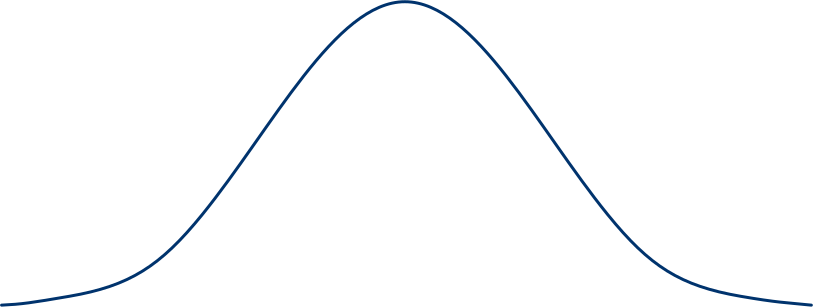
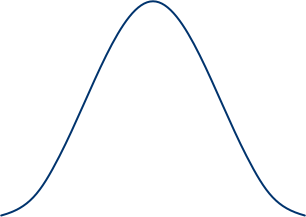
10%$44,310
25%$50,350
50%$58,130Median
75%$70,390
90%$87,980
Median Hourly Wage$28
Job growth12.7%
Total Employment5,800
| Metro area | Median Salary | Bottom 10% | Top 10% |
|---|---|---|---|
| Albany-Schenectady-Troy, NY | $61,610 | $39,480 | $93,400 |
| New York-Newark-Jersey City, NY-NJ | $59,340 | $45,760 | $92,020 |
| Kiryas Joel-Poughkeepsie-Newburgh, NY | $57,240 | $43,820 | $72,290 |
| Syracuse, NY | $54,320 | $40,940 | $87,830 |
| Buffalo-Cheektowaga, NY | $52,900 | $38,200 | $70,390 |
| Rochester, NY | $52,110 | $40,300 | $67,260 |
| Binghamton, NY | $49,010 | $39,130 | $70,230 |
| Utica-Rome, NY | $46,840 | $38,380 | $64,340 |
Source: U.S. Bureau of Labor Statistics (BLS) 2025 median salary; projected job growth through 2035. Actual salaries vary depending on location, level of education, years of experience, work environment, and other factors. Salaries may differ even more for those who are self-employed or work part time.
10%$35,980
25%$39,790
50%$47,190Median
75%$56,140
90%$64,430
Median Hourly Wage$23
Job growth7.4%
Total Employment40,970
| Metro area | Median Salary | Bottom 10% | Top 10% |
|---|---|---|---|
| Ithaca, NY | $53,550 | $38,360 | $70,230 |
| New York-Newark-Jersey City, NY-NJ | $47,860 | $36,070 | $67,420 |
| Elmira, NY | $47,850 | $34,880 | $57,760 |
| Kiryas Joel-Poughkeepsie-Newburgh, NY | $47,760 | $35,180 | $66,620 |
| Syracuse, NY | $47,330 | $36,770 | $59,210 |
| Kingston, NY | $47,290 | $34,840 | $66,620 |
| Albany-Schenectady-Troy, NY | $45,490 | $35,170 | $66,440 |
| Rochester, NY | $44,800 | $33,240 | $66,620 |
| Buffalo-Cheektowaga, NY | $44,340 | $32,240 | $60,670 |
| Glens Falls, NY | $43,940 | $34,930 | $59,820 |
Source: U.S. Bureau of Labor Statistics (BLS) 2025 median salary; projected job growth through 2035. Actual salaries vary depending on location, level of education, years of experience, work environment, and other factors. Salaries may differ even more for those who are self-employed or work part time.
10%$42,410
25%$48,160
50%$59,450Median
75%$73,710
90%$90,590
Median Hourly Wage$29
Job growth18.4%
Total Employment26,770
| Metro area | Median Salary | Bottom 10% | Top 10% |
|---|---|---|---|
| Ithaca, NY | $65,010 | $44,470 | $92,280 |
| New York-Newark-Jersey City, NY-NJ | $61,020 | $42,410 | $101,190 |
| Kingston, NY | $60,040 | $38,190 | $94,160 |
| Rochester, NY | $59,620 | $38,900 | $78,370 |
| Glens Falls, NY | $59,350 | $38,290 | $76,370 |
| Kiryas Joel-Poughkeepsie-Newburgh, NY | $59,230 | $44,570 | $86,190 |
| Syracuse, NY | $57,940 | $39,650 | $74,430 |
| Binghamton, NY | $57,720 | $45,050 | $83,200 |
| Albany-Schenectady-Troy, NY | $57,030 | $39,890 | $88,290 |
| Buffalo-Cheektowaga, NY | $55,750 | $39,350 | $90,590 |
Source: U.S. Bureau of Labor Statistics (BLS) 2025 median salary; projected job growth through 2035. Actual salaries vary depending on location, level of education, years of experience, work environment, and other factors. Salaries may differ even more for those who are self-employed or work part time.
Here’s how the BLS compared national median pay rates among other human services professionals:
Employment of human services assistant roles is expected to grow 7.4% through 2035, which is faster than the national average for all occupations, however New York job growth is expected to be even faster than average.
According to O*Net, a subsidiary of the BLS, human services assistants would enjoy a 24% projected job growth rate in New York through 2032, which is much faster than the national average, adding around 950 new positions.
Several New York-specific factors significantly impact what you may be able to earn in the human services field. Here are a few of the most important ones:
For a more detailed breakdown of human services salaries where you live, check out your state below:
The education path to become a human services assistant in New York State is accessible and can be tailored to different career goals. Here’s a step-by-step overview of what’s typically required and what may improve your job prospects:
New York is the sixth highest state for cost of living said the Cost of Living Index, which ranked it at 123.3, meaning if the national average is 100, New York is 23.3% higher than the average, making it an expensive place to live. It also explains why salaries tend to be higher in the state, as they must compensate for higher expenses.
However, expenses can vary significantly across different cities. While the Manhattan-New York City, Brooklyn and Westchester County areas are very high as far as cost of living, there are places that are more affordable, such as Buffalo, Utica and Binghampton metro areas, which are university towns and are slightly below the national cost of living average.
Professional groups offer support, advocacy and important resources for human services workers. Here are some key professional organizations in NY that support human services workers, including those in social work, counseling and community health services:
New York State Social Work Education Association (NYSSWEA): NYSSWEA is a statewide organization that connects social work and human services educators, practitioners and students. It offers networking events, professional development and annual conferences focused on policy, practice and education in human services.
New York State Community Action Association (NYSCAA): This is a statewide membership association representing community-based agencies that address poverty, housing, employment and support services.
NYSCAA offers training, policy advocacy and resources for those working in case management, community health and family services.
National Association of Social Workers–New York State Chapter (NASW-NYS): The NY State chapter of the largest professional social work association in the U.S. provides licensure support, CEU credits, job boards, legislative updates, and peer networks for social workers and human services professionals.
A career in human services in New York may be shaped by your location in the state, specialization and level of education earned. While wages are good and the state is progressive and supportive of human services roles, the high cost of living in many New York cities may impact how far your salary goes. Use our salary guide to help you make an informed decision about education choices and pay and entering into a career dedicated to helping others.