

Becoming a Certified Peer Support Specialist: A human services path

Our lives are often defined by our deepest struggles as much as our greatest triumphs. At times they are one and the same. But even for those who manage to emerge from their darkest hour, it’s not always clear—or fair—why they had to suffer so much at all.
What if you could turn your suffering into something more meaningful, something that could help others? That’s exactly what peer support specialists do. They draw upon their own lived experiences to support people facing the same challenges they once went through.
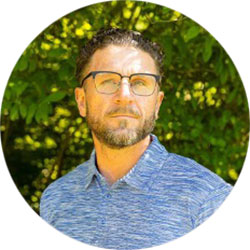
“A peer support specialist is a courageous individual or caregiver that has survived and navigated mental and behavioral health challenges, substance use, trauma, injustice, loss, incarceration, system involvement—or any path that’s shaped resilience through adversity into a powerful foundation for supporting others. We’ve been through the struggle, and instead of letting it define us, we’ve chosen to transform it into purpose,” said Nathan Enholm, a Certified Peer Support Specialist, Advanced Level WRAP (Wellness Recovery Action Plan) Facilitator and keynote speaker with years of experience in the mental health and human services fields.
So—what does it take to become a peer support specialist, and what is this human services career really like? Let’s dive in.
What is a peer support specialist?
Peer support specialists are people who have survived personal challenges and work with individuals struggling with the same issues. Their primary function is to provide emotional support and help guide their clients through the recovery and healing process. They can also help connect clients with other resources to assist in their recovery journey.
Substance abuse is perhaps the most common issue peer support specialists help with. That said, peer support specialists can help people with a variety of other issues such as trauma, incarceration, mental health disorders and much more. These challenges may be—and often are—co-occurring.
“We work in deep partnership with clinical teams, offering something uniquely complementary: the kind of connection that comes from lived understanding,” Enholm said. “We show up as peers—not to fix, but to walk alongside. Our presence says, ‘I’ve been there too, and you’re not alone.’ That sense of shared humanity can often be the spark that makes formal treatment more meaningful and lasting.”
Indeed, even though counselors, therapists, social workers and other care team members have their roles to play, they may not directly relate to their clients’ struggles. The beauty of a peer support specialist is that they have walked in the client’s shoes and can show them that a better life is possible—because they have seen it for themselves.

We work in deep partnership with clinical teams, offering something uniquely complementary: the kind of connection that comes from lived understanding.
“We support individuals in reclaiming their hope, setting goals and building lives rooted in recovery. We connect people to care, facilitate community-based support and advocate for those whose voices haven’t always been heard. Many of us also serve as trainers, supervisors and program developers—working side-by-side with providers to create more responsive, person-centered systems.”
It’s important to keep in mind that peer support is not designed to replace clinical care, but rather to enhance it.
“Together, we build a fuller path to healing, where lived experience and professional expertise walk hand in hand,” Enholm said.
What do they do?
“We’re companions, advocates, mentors and guides. We provide practical tools, resources and strategies so individuals can reclaim their recovery journey. We create spaces, like support groups, where powerful stories are shared, hope is rediscovered and true community healing can take place,” Enholm said. “One of the best parts of the job is supporting peers with the setting of goals that matter to them, goals that empower them to write a new narrative for their lives.”
We’re companions, advocates, mentors and guides. We provide practical tools, resources and strategies so individuals can reclaim their recovery journey.
Though a peer support specialist’s job can vary depending on where they work and with whom, you can generally expect to do the following:
- Meet with clients one-on-one, either in-person or virtually
- Discuss clients’ situation, support needs, goals and more
- Listen to clients’ stories with compassion and empathy
- Help clients map out actionable steps to achieve their goals
- Assist clients with accessing essential social services
- Facilitate support groups for people dealing with like issues
“Recovery often involves navigating complicated systems—which can feel overwhelming or even impossible—so we walk those paths alongside our peers, lighting the way toward vital services, support and education,” Enholm said.
With experience, peer support specialists can help strengthen and expand the systems in which they work.
“Our role as leaders in the community naturally grows into training others, supervising teams, designing programs and influencing policy—because we believe passionately that the wisdom of lived experience must lead at every level of the recovery movement,” Enholm said.
Where do they work?
Peer support specialists can work for social service agencies, healthcare systems, nonprofit organizations, correctional institutions, schools and more.
Different organizations can offer slightly different experiences and influence the populations you work with. For instance, peer support specialists in schools or juvenile correctional facilities are typically working with youth populations who may be struggling with mental health issues, substance abuse, trauma or any other issues for which they need support. Even the Department of Veterans Affairs (VA) employs veteran peer support specialists.
The experiences you have to offer can help steer you towards the kind of settings that make the most sense for you.
How do you become a peer support specialist?
While qualifications for peer support specialists can vary widely, one requirement is universal—you must be someone who has directly experienced a particular type of adversity.
Many peer support roles simply require applicants to have a peer support certification. Most don’t even require a college degree, which makes it a highly accessible career.
“This is one of the most powerful and beautiful aspects of peer support: it dismantles the traditional barriers to professional purpose. It opens the door for anyone who carries the truth of transformation in their story,” Enholm said. “This path is not limited to one type of person—it belongs to veterans, to the formerly incarcerated, to clinicians in recovery, to single parents, to community healers and to individuals from all cultures, faiths and walks of life. Peer support thrives on diversity because healing is not one-size-fits-all—and neither are those called to serve.”
This path is not limited to one type of person—it belongs to veterans, to the formerly incarcerated, to clinicians in recovery, to single parents, to community healers and to individuals from all cultures, faiths and walks of life.
That said, having a degree in applicable fields like human services, psychology, counseling or social work can certainly help build some of the skills needed to be successful in this role.
What about certification?
Most states offer a state-specific certification for peer support specialists. In states where a certification is available, most employers require applicants to earn that certification.
“To become a Certified Peer Support Specialist in Washington state, the foundation is our past—it’s our lived experience that makes us experts. You must be at least 18 years old and have walked your own journey through mental health or substance use challenges, or be the parent or caregiver of someone who has,” Enholm said. “And most importantly, you must be in active recovery for at least one year.”
These certifications typically include a training program that teaches the skills for providing safe and effective support to clients.
“After qualifying, the training begins through the Washington State Health Care Authority. It starts with an online prerequisite course, followed by a formal application process. If accepted, you complete the 80-hour Certified Peer Specialist training—a trauma-informed, ethics-grounded curriculum that includes cultural humility, crisis awareness, systems navigation, recovery planning and more. Training is available in hybrid and fully virtual formats, meeting learners where they are—just as peer support meets people where they are.”
After training, Enholm said you must pass a written and oral exam and apply for the credential through the state’s Department of Health to begin working as a Certified Peer Specialist Trainee. From there, you must log 1,000 hours of supervised peer support in real-world settings to become fully credentialled. This allows you to bill Medicaid or other insurance in a professional capacity. Keep in mind that this process is specific to Washington state, and other locations may do things a little differently.
Other certifications
In addition to state-specific certifications, there are other peer support certifications available:
- National Certified Peer Specialist (NCPS) through the National Certification Board for Behavioral Health Professionals
- National Certified Peer Recovery Support Specialist (NCPRSS) through NAADAC, the Association for Addiction Professionals
What to expect as a peer support specialist
A career as a peer support specialist is full of possibilities—but it’s not without challenges, either.
Pros of a peer support specialist career
“This work is powerful because it’s real. It’s raw. And it’s built on human connection,” Enholm said. “We’re not here to fix people—we walk beside them. We hold hope, model resilience and remind folks that they’re not alone in this. That’s not just fulfilling—it’s life-affirming.”
This work is powerful because it’s real. It’s raw. And it’s built on human connection.
Most peer support specialists would probably agree that the emotional fulfillment of making a lasting impact on others’ lives is the best part of the job. But a career in peer support has other benefits too, including:
- You have the opportunity to give profound meaning to your personal hardship and use it to help others
- Beyond having certain lived experiences to draw upon, there are minimal entry requirements for employment
- Full-time and part-time employment options are often available
- Many specializations are available depending on the lived experiences you have to offer
“Working as a peer support specialist is more than just a good job—it’s transformational. For a lot of us, it’s what gave our pain a purpose. We get to take some of the most difficult parts of our past—things we once thought might destroy us—and use them as tools to help others reclaim their lives. There’s something deeply sacred about that,” Enholm said.
Challenges of a peer support specialist career
Like many other jobs in the human services field, the reason people are drawn to this career is also the source of its biggest challenge: caregiving careers can be exhausting.
“This work doesn’t just ask for your time—it asks for your presence, your patience and your heart,” Enholm said. “You’re going to hear some hard stories. You’re going to sit with people in moments that are painful and raw. And that can be heavy. That’s why boundaries, self-care, supervision and peer-to-peer connection aren’t optional—they’re absolutely necessary.”
To really understand what you’re in for, consider some of the challenges you may face as a peer support specialist:
- The work can be emotionally draining, which can lead to burnout
- Depending on the organization you work for, you may have to deal with the limited resources, budgets and support that can plague human services jobs
- To be successful, you must be willing to commit to your own spiritual and emotional growth
“Another challenge—one that myself and others are always willing to advocate for—is that many systems still don’t fully understand or respect the power of lived experience. You may find yourself needing to explain your role, educate coworkers or navigate environments that weren’t designed with peer support in mind,” Enholm said. “But that’s where the opportunity is too—because every single day you show up, you’re helping shift that culture. You’re proving that lived experience isn’t a limitation—it’s a qualification. And that healing work should be led by people who’ve walked that path themselves.”
Salary and job outlook
The U.S. Bureau of Labor Statistics (BLS) does not have salary data for peer support specialists specifically since this role could fall under multiple different job titles that they track. To get a sense of how much you might earn, check out how salaries compare for similar jobs within the field:
Job growth outlook is also difficult to predict for the same reason, but we do know that the BLS expects the employment of community and social services jobs to grow faster than the average across all occupations.
What comes next?
If you think you want to build a career in peer support, all you need are the experiences to get started.
“The incredible thing is, no matter who you are or where you come from, this path is open to you. In peer support, your story doesn’t disqualify you—it qualifies you,” Enholm said.
Though a college degree is not usually a requisite for peer support roles, it can help you build some essential skills. Higher education may also help if you’re interested in moving into managerial or instructor roles later on.
“This is more than a career. It’s a calling rooted in shared humanity, mutual empowerment and the unwavering belief that recovery is not only possible, it’s worth building a life around.”